Two specifications with different jobs
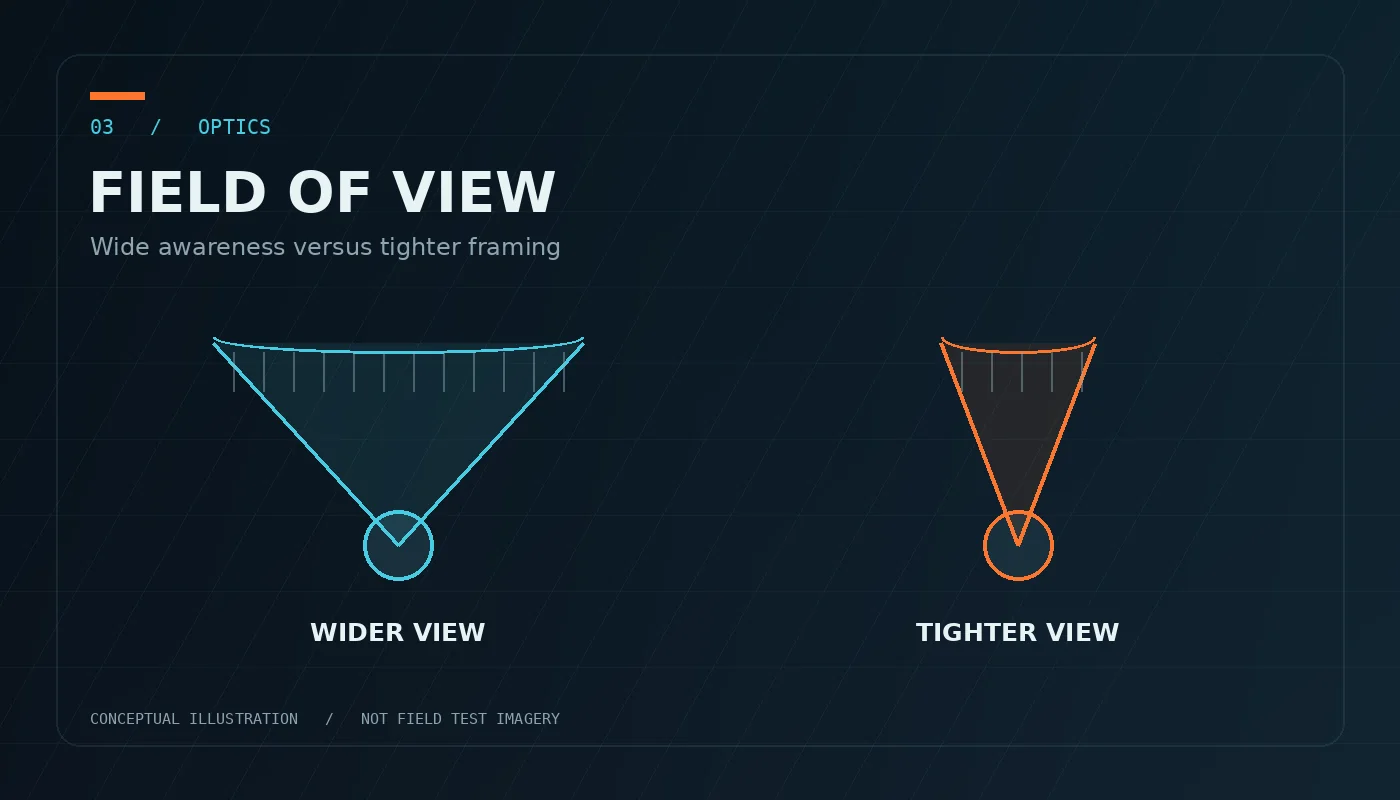
Field of view describes how wide a scene appears through the optic, usually expressed as an angle or scene width at a given distance. Optical magnification describes the underlying image scale before digital cropping. In many fixed-sensor systems, changing lens focal length can narrow the field of view while increasing the apparent scale of distant objects.
Digital zoom is not additional detector detail
When a device enlarges an existing thermal image digitally, it also enlarges the same underlying samples. Software can make edges more legible, but it does not capture scene details that the detector never resolved. Be especially careful when a listing combines optical base magnification with a much larger digital maximum.
Use the manufacturer's angle, not just the name
Lens names such as “35mm” and “50mm” are useful clues, but the actual field of view also depends on detector dimensions and pixel pitch. Compare horizontal field-of-view degrees and detector size for the exact product variant. A higher base magnification can be an advantage for some observation tasks and a disadvantage when a wide overview is needed.
Our catalog includes a lens designation only when the retailer's model name explicitly supplies one. That is not a substitute for a manufacturer specification document.
Primary references
The technical context for this guide includes the source reference. We do not reproduce supplier reviews or imply firsthand testing.