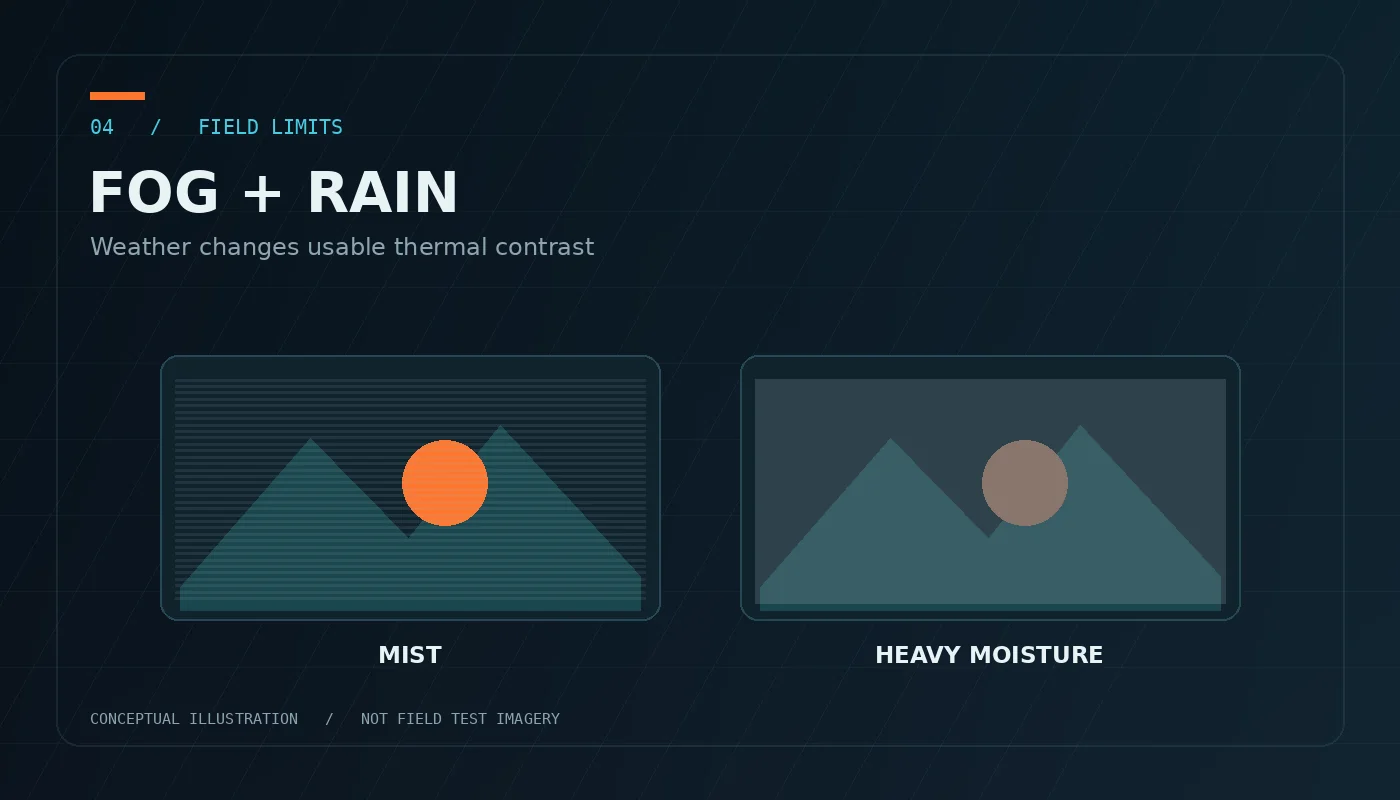
Infrared radiation still travels through the atmosphere
Thermal systems operate differently from visible-light cameras, but moisture and atmospheric absorption still matter. FLIR explains that while light fog and rain may permit useful thermal images, fog density, rainfall and humidity reduce transmitted infrared energy and can significantly limit effective visibility. Claims that thermal “cuts through any fog” are too broad.
Conditions change the comparison
Warm ground, humid air, solar heating earlier in the day, cold surfaces and precipitation can all alter thermal contrast. A product demonstration in clear, cool nighttime conditions does not prove equivalent imagery in a wet, humid morning. Any side-by-side evaluation should match the weather and operating conditions as closely as possible.
What to ask before relying on range claims
Find out whether a listed distance refers to detection, recognition or identification. These categories are not synonyms. Also ask about the size and contrast of the test object and whether the measurement was taken under stated atmospheric conditions. Without context, a single long-distance headline number is a poor way to compare systems.
For reliable expectations, prioritize original demonstration footage and carefully documented technical testing rather than marketing artwork.
Primary references
The technical context for this guide includes the source reference. We do not reproduce supplier reviews or imply firsthand testing.