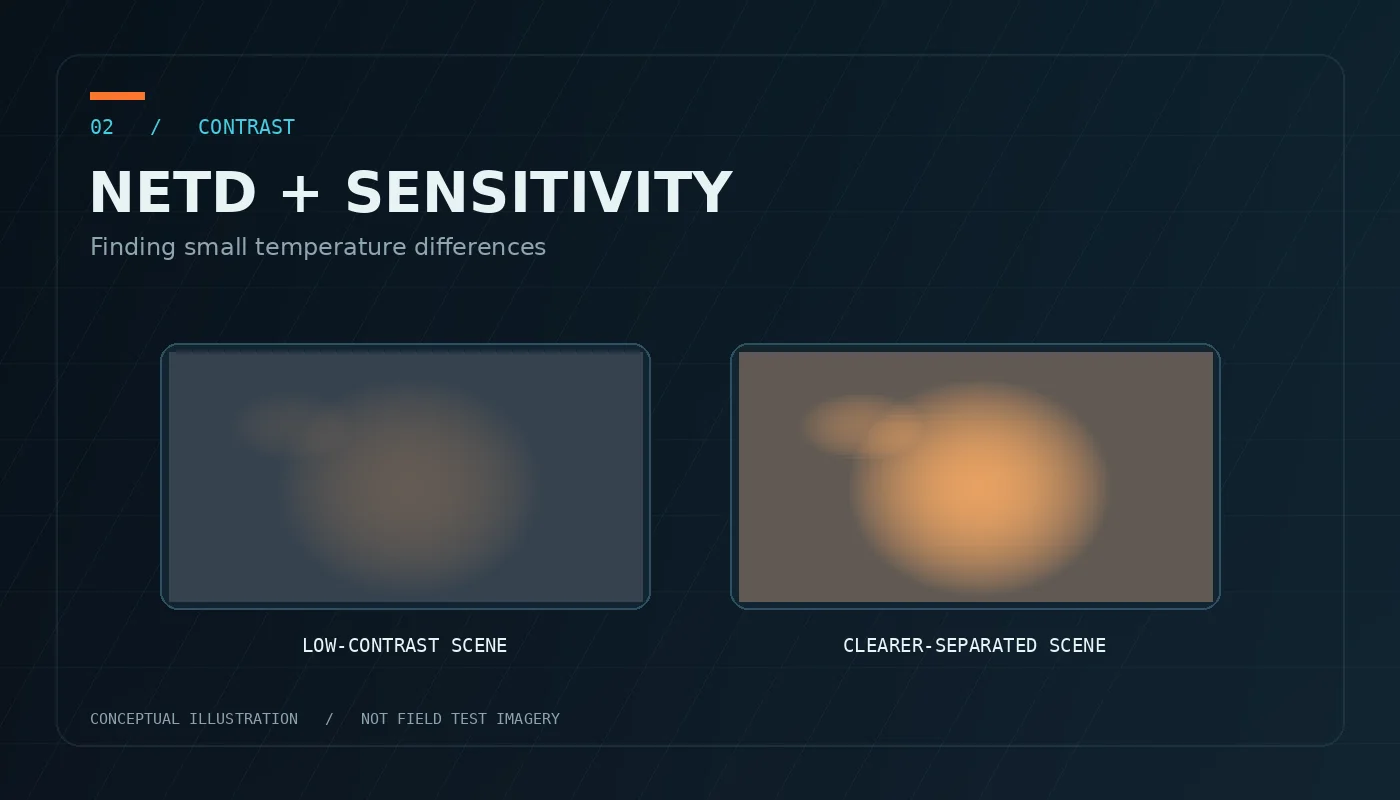
What NETD measures
Noise Equivalent Temperature Difference, usually abbreviated NETD or NEdT, estimates the smallest temperature contrast that the imaging system can distinguish from its own noise. The result is expressed in millikelvins (mK). All else equal, lower NETD indicates better sensitivity to fine temperature differences. This is particularly relevant in low-contrast scenes.
Why the test conditions matter
Quoted NETD figures are not automatically apples to apples. Lens f-number, scene conditions and measurement temperature affect results. FLIR notes that lens f-number matters and explains the convention of normalizing NETD to an f/1.0 reference. Check the complete conditions before treating a 20 mK claim from one vendor as directly comparable with another vendor's 25 mK claim.
How to use it in a shortlist
First establish native sensor resolution and optical field of view. Next examine the stated NETD and its measurement conditions. Then review independent sample recordings that represent similar temperature contrasts and weather. Processing algorithms can make images look dramatically different even between systems with similar sensor metrics.
NETD is best used as one component of a specification sheet, not a standalone ranking. A very low advertised value does not demonstrate every aspect of real-world image clarity.
Primary references
The technical context for this guide includes the source reference. We do not reproduce supplier reviews or imply firsthand testing.