Different sources of information
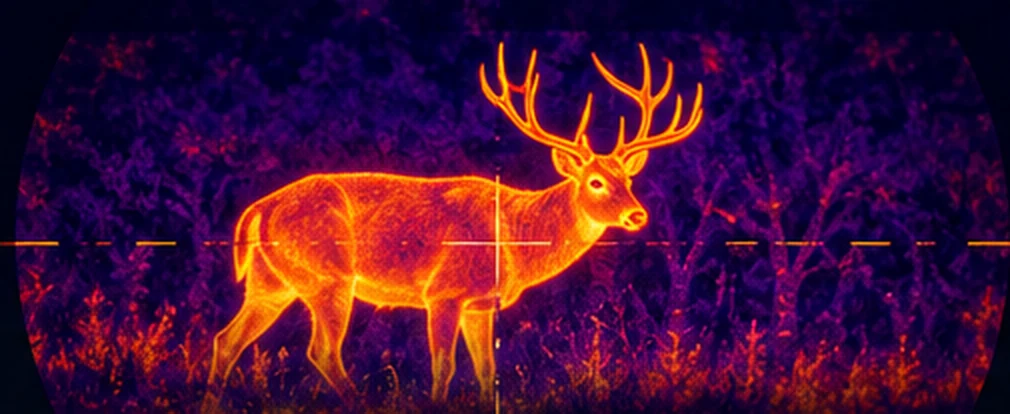
Long-wave thermal imaging represents differences in emitted infrared radiation rather than making an ordinary visible-light photograph brighter. Conventional image-intensifying night vision relies on available photons, while some digital night-vision systems use near-infrared illumination. That is why an unlit scene can look fundamentally different through thermal and night-vision instruments.
Recognizing shapes and details
Thermal contrast can make warm objects stand apart from a cooler environment, but shape recognition can be challenging when objects share similar apparent temperatures. Night-vision imagery may preserve textures, lettering and other scene details differently. Thermal is not a substitute for every kind of optical identification.
Neither technology sees through walls
Thermal cameras typically detect surface emissions from objects in their field of view. They cannot look through ordinary walls to reveal hidden interiors. Certain glass surfaces are also opaque to long-wave thermal cameras, despite being transparent to visible light. Environmental conditions and foreground objects remain important limitations.
When evaluating combined thermal and digital imaging products, look for the actual camera systems and output modes. “Dual” or “fusion” alone does not tell you the detector specification of either channel.
Primary references
The technical context for this guide includes the source reference. We do not reproduce supplier reviews or imply firsthand testing.